Aktuelles
  • Herzlich Willkommen im Balkanforum
    Sind Sie neu hier? Dann werden Sie Mitglied in unserer Community.
    Bitte hier registrieren

[Türk Silahlı Kuvvetleri] - Turkish Armed Forces - Türkische Streitkräfte

Ich schwöre es dir, ich habe sogar gestern Abend noch über diesen Mann nachgedacht. Er ist einfach einzigartig..

Wir saßen mit der Familie zusammen und sahen das Bild dieses Mannes. Doch wusste niemand wirklich wie der Mann hieß der für viele Türken zum Symbol wurde. Also habe ich mich aufgemacht und den Mann recherchiert.

- - - Aktualisiert - - -

[FONT=proxima_nova_rgbold][FONT=proxima_nova_thextrabold]TEKNOLOJİ618[/FONT][/FONT]
[FONT=proxima_nova_rgbold][h=1]GÖRÜLMEYENİ İMHA EDİYOR![/h][/FONT]
[FONT=proxima_nova_rgbold]14 Kasım 2014 Cuma, 09:49:46


[/FONT]

[FONT=proxima_nova_rgbold][h=2]İşte Türk mucizesi[/h][/FONT]
[FONT=proxima_nova_rgbold][h=2][FONT=proxima_nova_ltsemibold]Termal kamera, TV kamera ve lazer mesafe ölçme cihazı takılabilen, otomatik hedef takip özelliğine sahip bulunan Muhafız sistemi, gece ve olumsuz görüş şartlarında çıplak gözle görülemeyen hedeflerin tespit edilmesini, otomatik olarak tanınmasını, takip ve imha edilmesini sağlıyor.

http://ekonomi.haberturk.com/teknoloji/haber/1009261-yuzde-yuz-yerli-uretim-tsk-silahlari-yerli-lazer-silahi-yerli-teknoloji-dunya-silah-devi[/FONT]
[/h][/FONT]


- - - Aktualisiert - - -

[h=1]Turkey slams collaboration with terrorist groups claim[/h]
23 March 2015 15:44 (Last updated 23 March 2015 15:52)
[h=2]The Turkish General Staff has dismissed allegations that the Turkish Armed Forces collaborated with terrorist groups like the PKK or the PYD[/h]


ANKARA
The Turkish military high command has rubbished claims that its armed forces recently collaborated with outlawed pro-Kurdish organizations.
In a statement released on its official website, the Turkish General Staff dismissed allegations that the Turkish Armed Forces, or the TSK, collaborated with terrorist organizations such as the Kurdistan Workers’ Party, or the PKK, and the Democratic Union Party, or the PYD.
"We strongly condemn media outlets and persons making such baseless allegations against the honorable, dignified and proud National Army of Turkey in front of our Turkish nation," the statement said.
The statement was released in the aftermath of PKK jailed leader's Newroz message on March 21 that said: “The PKK must convene a congress to end the 40-year armed conflict with Turkey.”
Also, Abdullah Ocalan in his message greeted the resistance displayed at the Syrian town of Kobani along with the "Ashme Spirit," which he termed as a new symbol of a new history.
Ashme refers to the place where the remains of Suleyman Shah, the grandfather of Osman I, founder of the Ottoman Empire, were moved from Turkey's original exclave in Syria on Feb. 21. It is located on Syrian soil, some 37 kilometers away from the Turkish border.
After PKK leader's remarks, some media organizations alleged that the Turkish Armed Forces cooperated with terrorist organizations PKK andPYD during the recent relocation of Shah's body.
The TSK statement also said that it was out of question for the armed forces to cooperate with terroristorganizations. Upon instructions and orders by the Turkish government, the Turkish Armed Forces would continue to fight against all forms of terrorism which target the Turkish state and nation, the statement added.
The Turkish government launched an initiative in early 2013, known as the "solution process," to end the decades-old conflict with the outlawed PKK, which has to date claimed the lives of more than 40,000 people.
Turkey as well as the U.S. and EU list PKK as a terrorist organization.
Newroz is the March 21 festival that marks the beginning of spring and is celebrated mainly in Iran, Afghanistan, India, Turkic republics such as Azerbaijan, Caucasus countries, Albania and Macedonia. Turkey's Kurdish population in particular see it as an important traditional and cultural event.

http://www.aa.com.tr/en/turkey/482573--turkey-slams-collaboration-with-terrorist-groups-claim
 
  • davutoglu-jpg20150324182301.jpg


[h=1]Turkish PM stresses focus on missile, space technology[/h]
24 March 2015 18:21 (Last updated 24 March 2015 18:23)
[h=2]Prime Minister Ahmet Davutoglu has said Turkey's military power hinges on locally produced technology.[/h]


KONYA, Turkey


Prime Minister Ahmet Davutoglu has highlighted the importance of making investments in missile and space technology to enhance Turkey’s military might.
"If we want to guarantee our perpetuity, especially in the next 100 years, we have to make necessary investments in missile and space technology and have major world-class infrastructures in these two sectors," Davutoglu said Tuesday.
He made the remarks at the inauguration ceremony of the Turkish National Defense Ministry's "Center for Firing, Testing and Assessment" in Karapinar Firing Range in central Konya province. The center has been jointly built by the Defense Ministry, Turkey's leading missile specialist Roketsan and the Turkish Armed Forces.
Turkey will test and evaluate rockets and locally-produced missiles at the new facility, which can also be utilized by friendly countries, including NATO allies if Ankara permits.
The premier said the country was one of the major world powers in conventional war technologies, adding that Turkey combined its civilian and democratic identity with its military power and thus made its mark in the region.
"The instabilities in our region have clearly shown us that Turkey needs to develop its own missile and space technology, and expand its national capacity beyond the one we have as a NATO member," he said.
He stressed that Turkey had the technological capacity and geography to establish the firing, testing and evaluation centers needed by NATO countries to test and practice their weapons.
The premier noted that the Turkish defense industry had been dependent on imports by up to 80 percent until 2002 when his party came to power, but now, thanks to research and development that figure had gone down considerably.
"Economic power and military power are parallel to each other. The fate of a country that cannot produce its own tanks, planes or ships will be in the hands of the one that can," he added.
Last Monday, Turkish President Recep Tayyip Erdogan and Davutoglu also opened the $157 million "Radar and Electronic Warfare Technology Center," launched by Turkey’s leading defense system producer, Aselsan, in Ankara.
Aselsan's new facility in Ankara’s Golbasi districts will employ more than 1,200 people, including 776 engineers who will work on the development of radar and electronic warfare systems for land, air, sea, aerospace and unmanned platforms.
With the aim of nationalizing its defense industry, Turkey in recent years has taken strides in locally produced defense products. The Turkish Aerospace Industries, or the TAI, began producing the attack and tactical reconnaissance helicopter, the ATAK (or "Attack"), in 2009.
Also, the design and production is underway for Turkey's main battle tank, known as ALTAY, whose engine and transmission units will be produced by TUMOSAN, the leading Turkish manufacturer of diesel engines.
Last month, the KARAYEL (or "northwest wind") drone was launched, which was developed by Vestel, a private Turkish company. An earlier drone, the ANKA ("Phoenix"), was produced by TAI in 2010.
Turkish defense producers aim to boost exports to $25 billion by 2023 from $1.6 billion last year, Turkey’s Undersecretary for Defense Industries said recently.
The top export items were aircraft, helicopter parts, engines, armored-land vehicles, speed boats, missiles, rockets, launching platforms, light weapons and electronic systems, including transmitters, simulators, sensors and software.
Ankara spent over $1 billion on defense, research and development in 2014. Turkey’s defense spending was 29.4 billion Turkish liras, or $13.2 billion, this year, according to Turkish Defense Ministry.
Turkey is currently negotiating a $3.5 billion deal for a long-range air and anti -missile defense system, including local production, with potential supplies from China and Europe. NATO opposes China’s bid for the Turkishmissile defense system. However, in February, Defense minister Ismet Yilmaz said that Turkey would integrate such a system from China into its national system that would be be used outside the NATO defense system.
The country plans to spend around $70 billion on military equipment until 2023, when the country will celebrate the 100th anniversary of the founding of modern republic.

Turkish PM stresses focus on missile, space technology Anadolu Agency
 
Korkut noch in der Prototypephase.

korkut_aic_tr-8-png.204534


Die Kurzstrecken Luftabwehrsysteme, die noch in der Entwicklungsphasen sind.

ScreenShot022.jpg


Aselsan leicht konstruierter Torpedo "Tork"

1-jpg.205820


Beim neu eröffneten Testgelände für Feuerkraft messungen.

11046463_810515395662851_4583394718932558304_n.jpg


10392485_810515385662852_3902804887643634617_n.jpg


der neue 105mm Howitzer auf dem neuem Testgelände.

J2O9Q0V.gif


Um diese Inhalte anzuzeigen, benötigen wir die Zustimmung zum Setzen von Drittanbieter-Cookies.
Für weitere Informationen siehe die Seite Verwendung von Cookies.


Turkish PM stresses focus on missile, space technology


davutoglu-jpg20150324182301.jpg


Prime Minister Ahmet Davutoglu has said Turkey's military power hinges on locally produced technology.


KONYA, Turkey

Prime Minister Ahmet Davutoglu has highlighted the importance of making investments in missile andspace technology to enhance Turkey’s military might.
"If we want to guarantee our perpetuity, especially in the next 100 years, we have to make necessary investments in missile and space technology and have major world-class infrastructures in these two sectors," Davutoglu said Tuesday.
He made the remarks at the inauguration ceremony of the Turkish National Defense Ministry's "Center for Firing, Testing and Assessment" in Karapinar Firing Range in central Konya province. The center has been jointly built by the Defense Ministry, Turkey's leading missile specialist Roketsan and the Turkish Armed Forces.
Turkey will test and evaluate rockets and locally-produced missiles at the new facility, which can also be utilized by friendly countries, including NATO allies if Ankara permits.
The premier said the country was one of the major world powers in conventional war technologies, adding that Turkey combined its civilian and democratic identity with its military power and thus made its mark in the region.
"The instabilities in our region have clearly shown us that Turkey needs to develop its own missile andspace technology, and expand its national capacity beyond the one we have as a NATO member," he said.
He stressed that Turkey had the technological capacity and geography to establish the firing, testing and evaluation centers needed by NATO countries to test and practice their weapons.
The premier noted that the Turkish defense industry had been dependent on imports by up to 80 percent until 2002 when his party came to power, but now, thanks to research and development that figure had gone down considerably.
"Economic power and military power are parallel to each other. The fate of a country that cannot produce its own tanks, planes or ships will be in the hands of the one that can," he added.
Last Monday, Turkish President Recep Tayyip Erdogan and Davutoglu also opened the $157 million "Radar and Electronic Warfare Technology Center," launched by Turkey’s leading defense system producer, Aselsan, in Ankara.
Aselsan's new facility in Ankara’s Golbasi districts will employ more than 1,200 people, including 776 engineers who will work on the development of radar and electronic warfare systems for land, air, sea, aerospace and unmanned platforms.
With the aim of nationalizing its defense industry, Turkey in recent years has taken strides in locally produced defense products. The Turkish Aerospace Industries, or the TAI, began producing the attack and tactical reconnaissance helicopter, the ATAK (or "Attack"), in 2009.
Also, the design and production is underway for Turkey's main battle tank, known as ALTAY, whose engine and transmission units will be produced by TUMOSAN, the leading Turkish manufacturer of diesel engines.
Last month, the KARAYEL (or "northwest wind") drone was launched, which was developed by Vestel, a private Turkish company. An earlier drone, the ANKA ("Phoenix"), was produced by TAI in 2010.
Turkish defense producers aim to boost exports to $25 billion by 2023 from $1.6 billion last year, Turkey’s Undersecretary for Defense Industries said recently.
The top export items were aircraft, helicopter parts, engines, armored-land vehicles, speed boats, missiles, rockets, launching platforms, light weapons and electronic systems, including transmitters, simulators, sensors and software.
Ankara spent over $1 billion on defense, research and development in 2014. Turkey’s defense spending was 29.4 billion Turkish liras, or $13.2 billion, this year, according to Turkish Defense Ministry.
Turkey is currently negotiating a $3.5 billion deal for a long-range air and anti -missile defense system, including local production, with potential supplies from China and Europe. NATO opposes China’s bid for the Turkishmissile defense system. However, in February, Defense minister Ismet Yilmaz said that Turkey would integrate such a system from China into its national system that would be be used outside the NATO defense system.
The country plans to spend around $70 billion on military equipment until 2023, when the country will celebrate the 100th anniversary of the founding of modern republic.

Turkish PM stresses focus on missile, space technology Anadolu Agency


Um diese Inhalte anzuzeigen, benötigen wir die Zustimmung zum Setzen von Drittanbieter-Cookies.
Für weitere Informationen siehe die Seite Verwendung von Cookies.

​


Turks Agree To Speed up Fighter Program


One_of_the_three_concept_design_of_TFX.jpeg


ANKARA — Turkey's government and military leaders have agreed to speed up the country's crawling program for the design, development and production of an indigenous fighter jet.


Officials here said there is a broad "administrative agreement" over a need to give the program a boost.

"The program will gain notable pace after the [parliamentary] elections [on June 7]," said one senior procurement official familiar with the program, dubbed TF-X. "There is consensus among the president [Recep Tayyip Erdogan], prime minister [Ahmet Davutoglu] and the Air Force that the program should go ahead with a 'priority tag.' "

An Air Force official assisting the program said the top brass in the service is "keen to go faster than before."

"Maximum [expert] input possible will be provided from our side," he said. "This is now an established policy."

Early in March, the Undersecretariat for Defense Industries (SSM) procurement agency released a request for information (RFI) for the ambitious TF-X.

In that document, SSM defined the scope of the fighter program as "indigenous design, development and production activities of the first Turkish fighter aircraft to meet Turkish Armed Forces' next generation fighter requirements and replace the existing F-16 fighter fleet starting from 2030s."

Companies or organizations capable of designing, developing and manufacturing the planned aircraft are invited to obtain an electronic copy of the RFI from SSM.

SSM officials say the release of the RFI marks a critical stage for the program, aiming "to see which companies would be willing to take part and which capabilities will be offered."

"We expect a satisfactory level of international interest," the procurement official said. "We already unofficially know that a number of foreign manufacturers hope to be part of this program."

He said a new roadmap also has been devised. The first thing Ankara will do, he said, is put together a team of SSM and Air Force officials that will be expected to run the program until the end.

"Soon there will formally be an enthusiastic team working on the ideal modality for the program," the official said.
"That team is being structured at the moment."

Turkey's top procurement panel, the Defense Industry Executive Committee, chaired by Davutoglu, officially decided on Jan. 7 to go ahead with the TF-X program after reviewing its feasibility.

At the meeting, the committee decided to move beyond the pre-concept design stage. It said a twin-engine model would be pursued in the national fighter aircraft program.

Other members of the committee are Defense Minister Ismet Yilmaz, Chief of Military General Staff Gen. Ncdet Ozel and chief procurement official, Ismail Demir, head of the SSM.

Davutoglu has said that a twin-engine model would be pursued in the national fighter aircraft program.

But the procurement official said this is not an irreversible decision. "We remain flexible on the choice of engine modality. Depending on our choice of a base model we may rethink that," he said.

He also said the "base model" could be both a NATO or a non-NATO product.


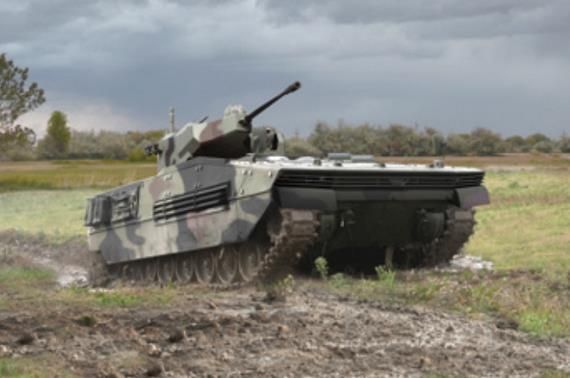
Tulpar
mit Camouflage

ScreenShot022_zpsd241b23e.jpg
 
Zurück
Oben